Why Pygeum is in the formula
The second-largest ingredient. It brings plant sterols, a different family of compounds from saw palmetto. Pygeum has a long history of use in Europe for men's urinary comfort and is often paired with saw palmetto.
What the research says
Older controlled studies of pygeum, pooled in a Cochrane review, found modest improvements in some urinary measures such as nighttime trips and flow, but most of those trials were small and short.
The standardization on the Prostacyl label (3% phytosterols) is a useful detail: it tells you the extract is measured for a marker compound instead of being plain ground bark.
Safety notes
Usually well tolerated in studies. Stomach upset has been reported. Ask your doctor first if you take prescription prostate medicine. As with any supplement, check with your doctor before starting Prostacyl if you take prescription medicine or have a health condition.
Food sources
Not a food ingredient. Plant sterols in general are found in nuts, seeds and whole grains.
How it works with the rest of Prostacyl
Pygeum is one of nine ingredients. Together they are designed around the label's three focus areas: healthy prostate size, urinary flow, and energy & vitality. See the full Prostacyl ingredient list or learn how the formula fits together.
Sources
- Enlarged Prostate (Benign Prostatic Hyperplasia) — National Institute of Diabetes and Digestive and Kidney Diseases (NIDDK)
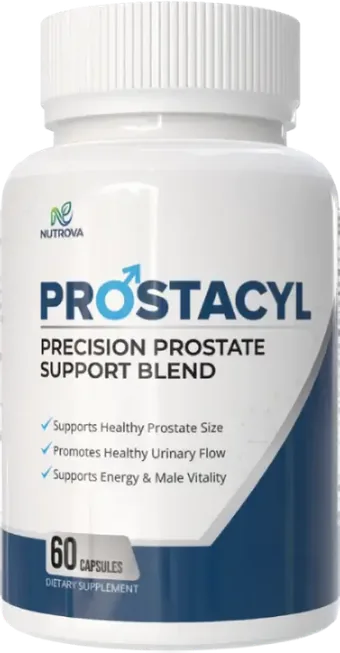
Ready to try Prostacyl?
Two capsules a day, a 60-day money-back guarantee, and free shipping on 3- and 6-bottle packages.
See Prostacyl Packages